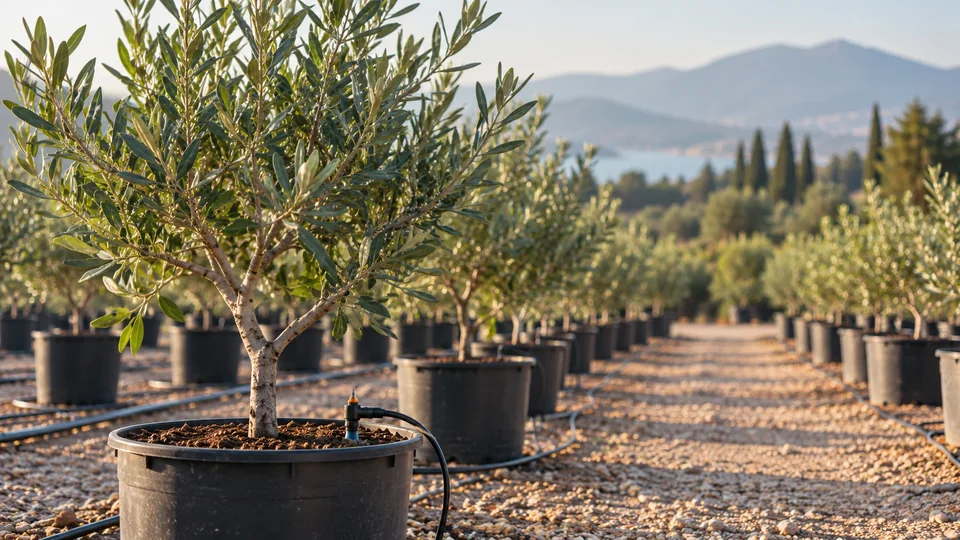
A wet surface does not confirm that water reached the roots. Check irrigation placement, medium and drainage, then evaluate whether a suitable water-retaining polymer improves management between watering rounds and establishment costs.
The irrigation system has run. The ground looks wet. Yet a newly planted tree is struggling, or part of a nursery still needs another watering round before the team can leave.
Adding more water may help. But first, there is a more useful question: what is happening where the roots are, between one watering event and the next?
For growers and landscape teams, that interval affects more than plant appearance. It can influence labour schedules, replacement work and the cost of getting plants successfully established.
This is where water-retention polymers deserve a closer look—not through a dramatic absorption demonstration alone, but through the growing system in which they would actually be used.
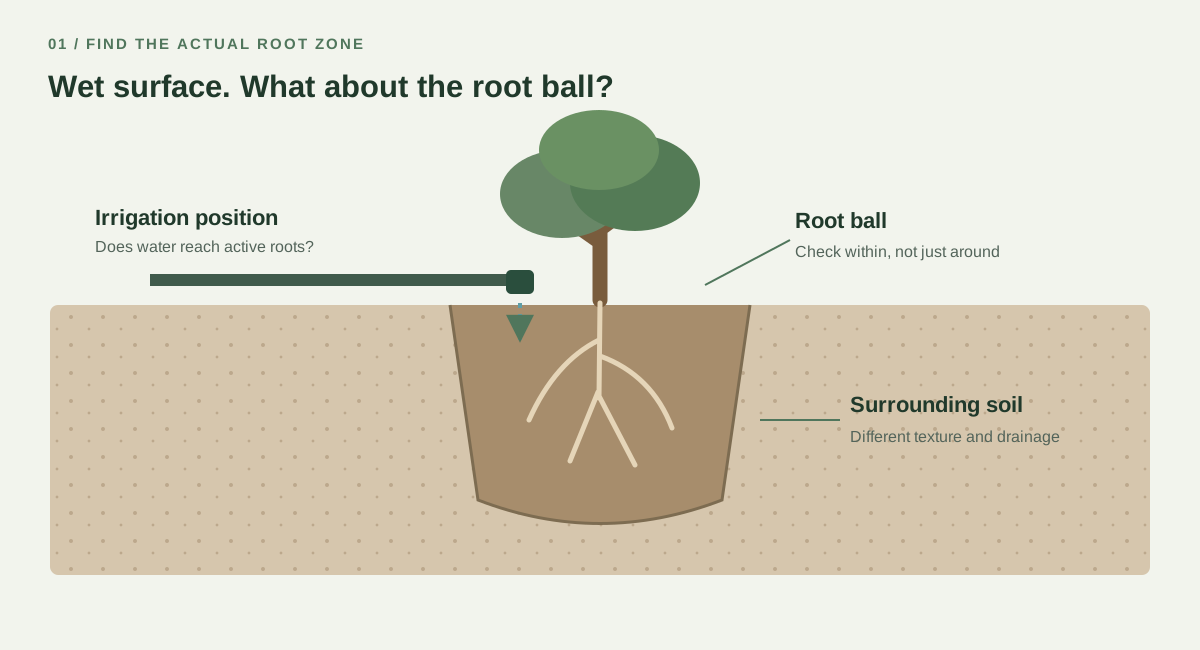
Water on the site is not the same as water available to the roots
A newly planted tree begins with a limited root system. The root ball, surrounding soil and irrigation placement all matter. A wet surface does not, on its own, confirm suitable moisture throughout the root ball.
University of Florida guidance specifically calls for moistening both the root ball and surrounding soil and providing irrigation during establishment. Its regional schedules should not be copied into every climate, but the underlying question is useful anywhere: are we watering the area that the developing roots can reach? [1]
Containers create a different challenge. Their limited volume and exposure can make moisture management demanding, particularly in hot conditions. Container size, growing medium, drainage, plant size and weather all affect the watering requirement. [2]
These are reasons to diagnose the root zone, rather than treating every struggling plant as a request for more water or another input.
↔ Swipe sideways to view the full diagram.
What does a water-retention polymer actually do?
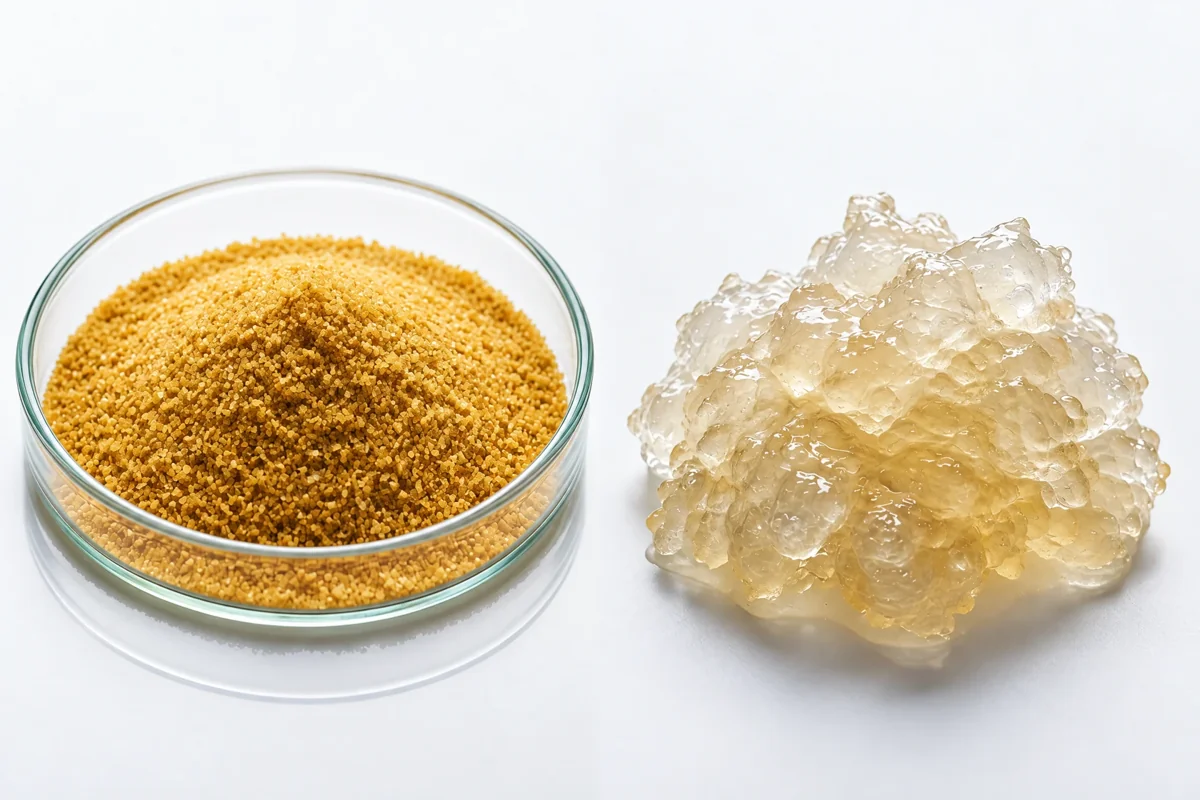
A superabsorbent polymer, or SAP, is a material that can absorb water and swell into a gel. In a suitable application, it is evaluated as an addition to soil or growing media to help manage moisture within the root zone.
It does not create water. It must receive water before it can retain any, and subsequent recharge still depends on rainfall or irrigation.
Nor does the largest swollen gel necessarily identify the best product for a particular crop. Water absorbed in a laboratory, water retained in soil and water available to a plant are related but different measurements. Research on grapevine hydrogels, for example, distinguishes field capacity, wilting point and the water available between those limits. [3]
The purchasing question is therefore more specific than “How much does it absorb?” It is: does this material improve useful moisture management in my medium, with my water, at a workable application rate?
For nursery incorporation, confirm particle grade, preparation, mixing uniformity and room for swelling. A grade suitable for mixing into a growing medium is not automatically suitable for bare-root dipping. At transplanting, review the root ball, target root layer and product-specific placement instructions before backfilling.
The operational problem often begins between watering rounds
Think about a nursery preparing for a hot weekend. The concern may be whether a particular group of pots will dry before staff return. The options could include another watering round, changes to irrigation, a different medium, shading where appropriate, or a water-retention additive.
Each option has a cost and an operating requirement. An additive that retains moisture longer in a trial does not automatically remove a shift from the work schedule. The team must be able to change its routine without compromising plant condition.
That is why a useful evaluation records both plant response and management effort: watering frequency, labour time, irrigation input and any plants requiring extra attention.
There is a similar issue in landscape establishment. Replacing a failed tree can involve much more than its purchase price: inspection, delivery, removal, replanting and another period of aftercare. The actual cost depends on the project. If water stress is a relevant cause, reducing that risk may be worth investigating. If planting depth, root damage or poor drainage is the cause, a water-retention product will not correct it.
Include dispatch, handling and transplant intervals in the watering plan. Record additional visits by batch and maintain a clear handover for inspections and supplementary watering.
Your irrigation water belongs in the test
A product demonstration is most informative when its conditions are stated.
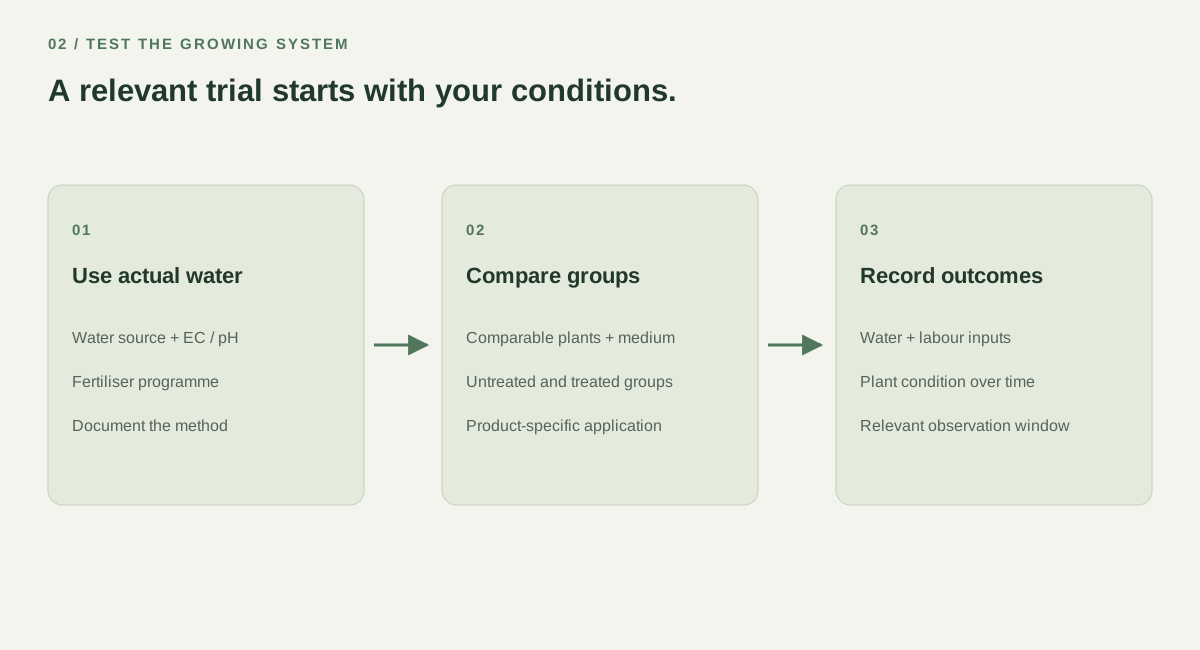
Which water was used? Was fertiliser added? How much material was tested, for how long, and by what method? Was the test performed freely in a cup or within a growing medium?
These distinctions matter when comparing products. A purified-water result should not be presented as a recommendation for every well-water or fertigation system. Water chemistry, polymer formulation, dose and medium all belong in the evaluation.
For an initial discussion, bring the actual water source, available EC and pH information, fertiliser programme and intended application method. These details help define a relevant trial; they do not, by themselves, predict the result.
↔ Swipe sideways to view the full diagram.
More retention is not always the right objective
Roots need appropriate moisture and access to air. In a poorly drained location, or a medium that already stays wet for too long, increasing retention may not be the priority.
Likewise, an uneven lawn may have a sprinkler-coverage or water-repellency problem. USGA guidance stresses the importance of distinguishing genuine localized dry spot from other causes. A water-retention polymer should not be confused with a wetting agent or used as a substitute for checking irrigation coverage. [4]
The practical alternatives deserve a fair comparison. Sometimes a substrate adjustment or an irrigation repair addresses the problem more directly. Sometimes a suitable additive is worth testing alongside those measures.
A good supplier discussion should help identify that difference.
Compare the cost per successful plant, not only the price per bag
Price per kilogram matters, but it is only one line in the calculation.
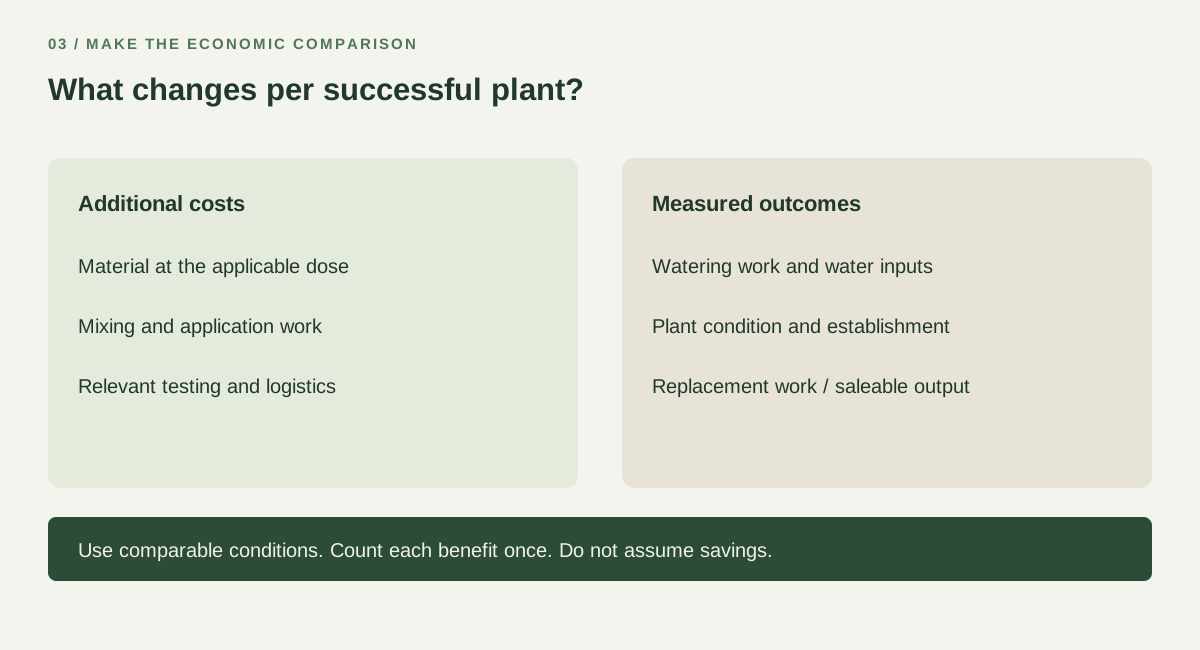
The application rate determines material cost per pot, tree or planted area. Mixing and application add work. Any required testing, logistics or changes to production also belong in the cost.
On the other side of the comparison, count only benefits supported by observation: a change in watering labour, replacement work or saleable output. Avoid counting the same benefit twice, and do not assume that a laboratory improvement translates directly into a commercial saving.
A higher-priced material must earn its place in the system. A lower-priced material should be evaluated by the same standard.
Define successful establishment and the observation period before calculating each group’s total cost and number of successful plants. Count replacement costs once. If no plants meet the agreed criteria, report costs and outcomes without calculating a cost per success.
| Cost question | What to record |
|---|---|
| Additional inputs | Material, transport, evaluation, mixing and application costs |
| Operational changes | Watering rounds, labour, water and inspection arrangements |
| Plant outcomes | Predefined plant condition, establishment and saleable-output measures |
| Comparison basis | Total cost over the same period and plants meeting the establishment criteria |
Cost per successfully established plant = comparable total cost over the observation period ÷ number of plants meeting the agreed establishment criteria.
↔ Swipe sideways to view the full diagram.
Start with a comparison small enough to manage—and relevant enough to learn from
Choose a defined crop, stage, medium and application opportunity. Nursery mixing, repotting or new planting may provide a more practical starting point than trying to introduce a material around established roots.
Use comparable untreated and treated groups, a product-specific application method and an observation period that matches the decision. Where possible, include appropriate replication and technical support. Record water inputs, management changes and plant outcomes—not just gel photographs.
If both the irrigation programme and material change at once, the trial needs a design that can separate their effects. Otherwise, the result should be described as a combined management change.
For distributors, this approach also creates something valuable to pass on: a clear explanation of where the material may fit, which questions to ask and what has actually been demonstrated.
Turn the growing brief into product and handling choices
For a ZJFunder SAP evaluation, describe the plant, soil or growing medium, container sizes, root-ball condition, water source, irrigation routine and the problem to improve. Product grade, samples and trial conditions can then be discussed against that application.
Hand tools may support transplanting, backfilling or localised mixing. Select the tool head, handle and working space for the task. Tools and SAP have separate specifications and supply arrangements; the presentation of a garden gift set is separate from the agronomic performance of a material.
Frequently asked questions
What is SAP in horticulture?
SAP means superabsorbent polymer. These materials absorb water and swell. Confirm the selected product and method for use in soil or growing media.
Can SAP replace irrigation?
No. It stores supplied water and still needs rainfall or irrigation for recharge.
Why test with my own irrigation water?
Water source, fertiliser solution, medium and method together define the actual application conditions.
Can one rate be used for all containers?
This article establishes no universal rate. Confirm the container, medium and selected product guidance.
Should bare roots always be dipped in gel?
No. Bare-root treatment, transplanting with a root ball and incorporation into growing media are different procedures and require appropriate product guidance.
How should costs be compared?
Compare total material and management costs, plant outcomes and cost per successful establishment over the same observation period.
Can tools and SAP be discussed together?
Yes, as separate components of the planting operation, with specifications and supply confirmed individually.