Winter changes how plants use water, but not in the same way everywhere. A dry, exposed lawn, a newly planted shrub and an indoor pot beside a heater need different decisions. Start with the plant, root-zone moisture and drainage, then decide whether a water-retention additive has a useful place in the next planting or renovation.
Turf: diagnose the site before changing the soil
Winter turf injury can involve desiccation, freezing and thawing, ice cover, disease or other site stresses. Grass species and climate matter: a cool-season lawn recovering in autumn is not a model for every turf system. Inspect moisture and drainage before treating a brown patch as drought or promising that a material will prevent winterkill.
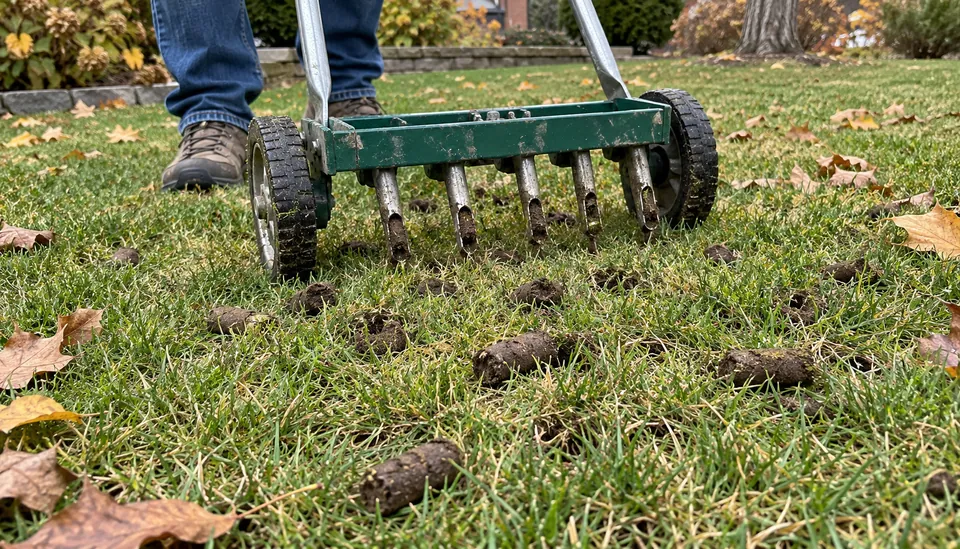
In dry autumn conditions, attend to existing watering needs while the ground remains unfrozen and coordinate with irrigation-system shutdown. Schedule aeration only when the grass, soil and recovery conditions suit the work. Applying granules into aeration holes is not automatically a validated SAP treatment: confirm distribution, depth and the selected product's instructions before considering an amended strip.
New trees and shrubs: manage both the root ball and surrounding soil
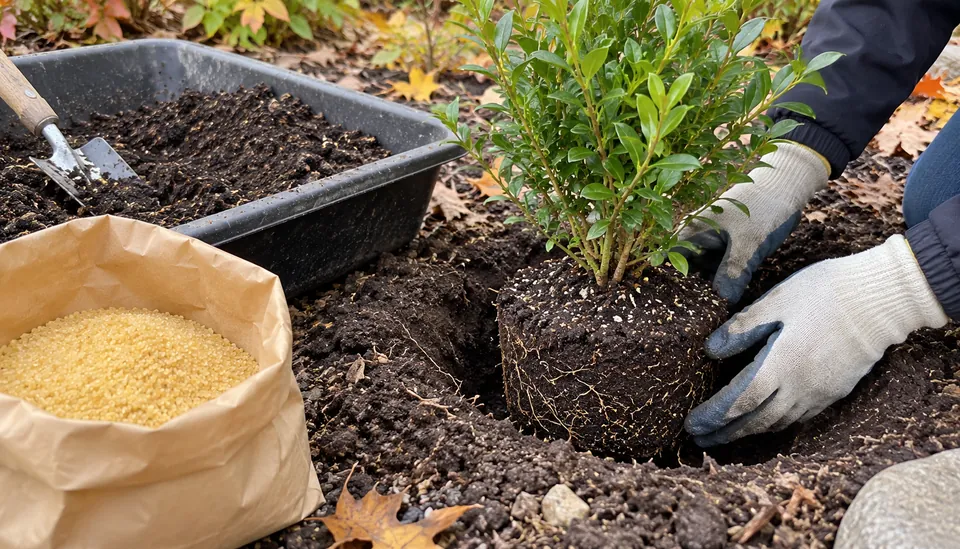
A recent transplant still relies on a limited root system. Check the original root ball as well as the surrounding soil; either may have a different moisture condition. Maintain suitable watering, drainage and species-appropriate winter protection. Drying wind can contribute to injury, but excess moisture and other cold-season stresses also need attention.
If SAP is being considered during planting, establish compatibility with the soil, stock and watering plan before changing the backfill. Keep the required planting depth, drainage and room for root development. A gel root dip needs explicit instructions for the chosen formulation and planting material; it is not interchangeable with mixing dry granules into soil.
Houseplants: check drying speed rather than the calendar
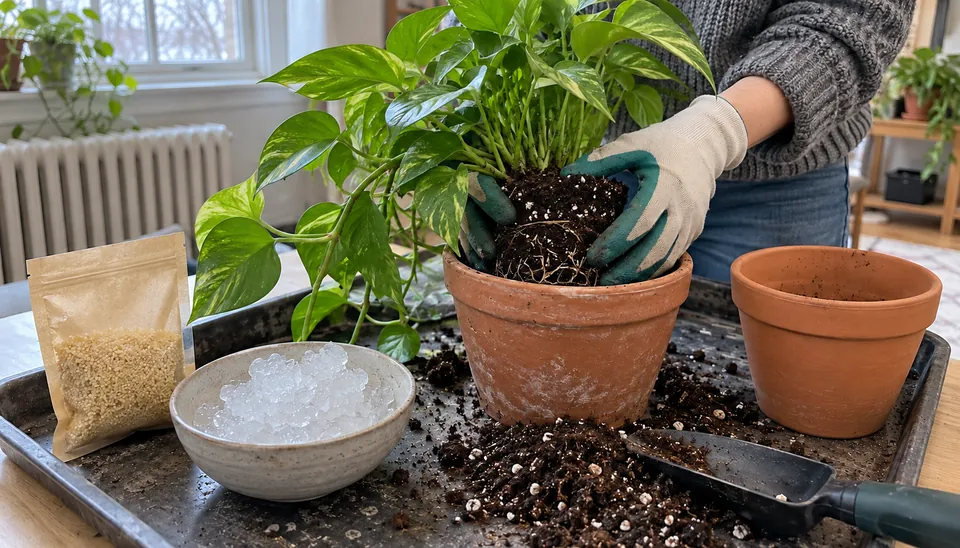
Heated indoor air may be dry, while reduced winter light can slow plant growth and water use. A pot therefore does not necessarily dry faster than in summer. Check the medium and the species' needs, use a container with working drainage, empty standing drainage water, and address light or humidity separately from root-zone watering.
Consider a retention additive only with a suitable potting mix and a reason to alter its moisture behaviour. Confirm the product's container instructions, mixing amount and expansion allowance in a small comparison. Avoid increasing retention in a pot that already stays wet. Repotting should follow the plant's condition and suitable timing, not become a routine winter requirement.
Select the treatment by formulation and use
Ask for the formulation, particle range, intended uses, application instructions and absorption test conditions. Pure-water and saline-water measurements answer different questions and do not establish a universal absorption capacity in soil. Compare the product with the actual irrigation water and medium; potassium-based chemistry does not remove the need to assess salts, drainage and plant suitability.
Plan a comparison that guides the next season
Keep a comparable untreated area or pot and record moisture, watering volume and timing, plant condition and work involved. For turf, include surface condition and recovery; for containers, observe drainage and persistent wetness. Review the result before expanding. For a ZJFunder application discussion, share your climate, plant species, soil or mix, water source and whether the work is new planting, renovation or existing containers.
University of Minnesota Extension: watering lawns before winter
University of Minnesota Extension: protecting trees and shrubs in winter